

Quick Take: Downsizing in North Idaho can reduce your housing expenses, simplify maintenance, and free up equity. But a smaller home doesn’t always come with smaller bills. Property taxes, insurance, HOA fees, utilities, and moving expenses can significantly affect how much you actually save.
Is downsizing to a smaller home in North Idaho always cheaper?
Not necessarily. A smaller home may cost less to maintain, but its purchase price, property taxes, insurance, and financing costs could offset those savings. Comparing the total cost of ownership helps you determine whether downsizing makes financial sense.
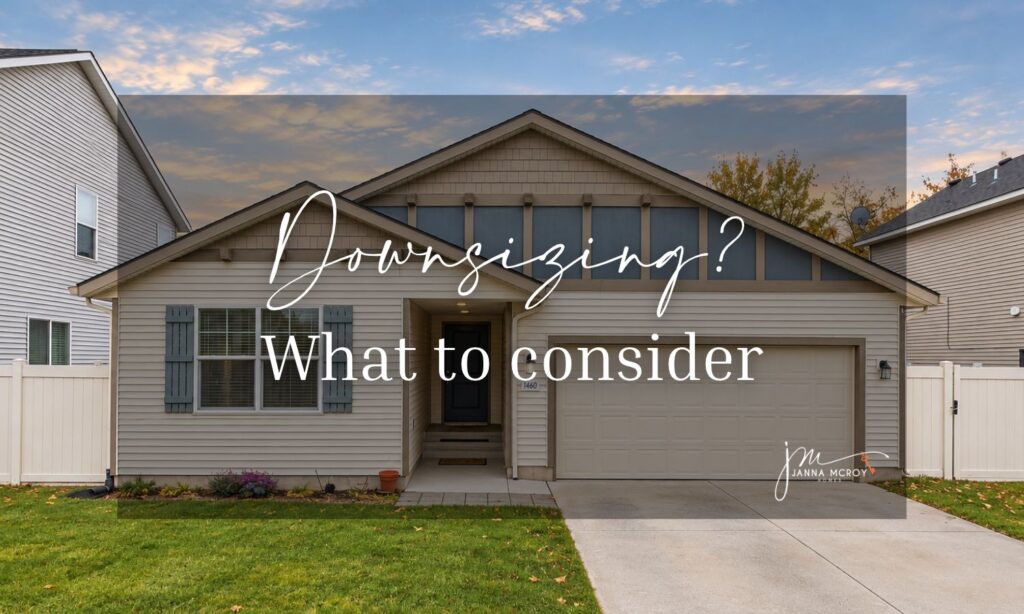
If you’re considering downsizing in North Idaho, you may be imagining a home with fewer rooms to clean, a smaller yard to maintain, and more freedom to enjoy your time. Whether you’re looking at homes in Coeur d’Alene, Post Falls, Hayden, or nearby communities, moving into a smaller property can be an appealing next chapter.
But there’s an important question to answer before putting your current home on the market: Will your next home actually cost less?
The answer depends on much more than square footage or the listing price. A thoughtful downsizing plan considers what you’ll spend to purchase, own, maintain, and eventually sell your next property.
Here’s how to compare your options and make a decision that supports both your finances and your lifestyle.
1. Compare Purchase Prices, Not Just Square Footage
One of the biggest misconceptions about downsizing is that a smaller home automatically costs less.
In North Idaho, location, property type, condition, lot size, and amenities can influence prices just as much as square footage.
For example, a smaller, newer home in a desirable Coeur d’Alene location may cost more than a larger, older property farther from town. Similarly, a low-maintenance townhome could have a higher purchase price than a detached home requiring more upkeep.
When comparing potential homes, consider:
- Purchase price: How much will you pay for the new property?
- Equity from your current home: How much money will remain after paying off your mortgage and selling expenses?
- Financing: Will you purchase with cash, take out a smaller mortgage, or finance a significant portion of the purchase?
- Interest costs: If you’re replacing an existing mortgage, how will the new loan’s interest rate affect your monthly payment?
- Property condition: Will the home require immediate repairs or improvements?
A lower purchase price is helpful, but the amount you finance and the condition of the property can have an even greater impact on your ongoing expenses.
The takeaway: Compare what you’ll actually pay to acquire and own the home, not simply its size or advertised price.
2. Understand Property Taxes in North Idaho
Property taxes are an important part of your downsizing budget, especially when comparing homes in different communities.
Idaho property taxes are based on assessed property values and the tax rates established by applicable local taxing districts. That means two homes with similar purchase prices may have different annual tax bills.
According to the Idaho State Tax Commission, county assessors determine property values, while local taxing districts establish the rates used to calculate property taxes.
Before purchasing your next home, review the property’s tax history and ask about any exemptions that may apply.
Don’t Overlook Idaho’s Homeowner’s Exemption
If your next property will be your primary residence, you may qualify for Idaho’s homeowner’s exemption.
The exemption can reduce the taxable value of an eligible home and up to one acre of land by 50%, up to a maximum exemption of $125,000.
The Idaho State Tax Commission provides eligibility information, while the Kootenai County Assessor’s Office explains how to apply locally.
A change enacted in 2026 also eliminated proration of the exemption based on when an eligible application is filed during the calendar year, subject to the applicable filing deadline.
Keep in mind that a property’s previous tax bill may not reflect what you’ll pay after purchasing it. Changes in assessed value, exemptions, and local tax rates can affect your future expenses.
The takeaway: Ask for an estimate of your expected property taxes rather than relying exclusively on the current owner’s tax bill.

3. Factor in Homeowners Insurance
A smaller home doesn’t necessarily mean a smaller insurance premium.
Homeowners insurance costs depend on factors such as the property’s replacement cost, construction, roof condition, location, coverage limits, and deductible.
According to the Consumer Financial Protection Bureau, homeowners should compare written insurance quotes and coverage details before selecting a policy.
This is especially important when evaluating different property types in North Idaho.
For example, a detached home, condominium, and townhome may have different insurance requirements.
If you’re considering a condominium, the association may maintain insurance for certain shared structures or common areas. However, you’ll typically still need coverage for your individual unit and belongings.
Before making an offer, request insurance quotes for the properties you’re seriously considering.
The takeaway: Include actual insurance estimates in your calculations, not assumptions based on the home’s size.
4. Look Closely at HOA Fees and Community Expenses
One reason homeowners downsize is to reduce maintenance responsibilities.
A condominium or townhome with an homeowners association (HOA) may offer conveniences such as landscaping, snow removal, or exterior maintenance.
Those services can be valuable, but they aren’t free.
Monthly or annual HOA dues should be included in your housing budget. You’ll also want to understand exactly what those dues cover.
For example, one community might include landscaping, snow removal, and exterior building maintenance, while another provides fewer services.
Also consider whether the association has adequate reserves for future repairs. Unexpected expenses may lead to special assessments or increases in regular dues.
Before purchasing a property within an HOA, review the governing documents, budget, reserve information, and any pending or approved assessments.
A home with HOA dues isn’t necessarily a poor financial choice. Paying for shared maintenance may be worthwhile if it reduces your personal workload and predictable upkeep expenses.
The takeaway: Evaluate HOA costs alongside the services and maintenance responsibilities they replace.

5. Estimate Maintenance and Utility Costs
Maintenance is one area where downsizing can create meaningful savings.
A smaller property may require less time and money for cleaning, landscaping, heating, cooling, and repairs.
However, the age and condition of the home matter.
An older 1,500-square-foot house with aging systems could require more immediate spending than a newer 2,000-square-foot home with recently installed equipment.
When comparing properties, consider the condition and expected replacement costs of major components, including the roof, HVAC system, water heater, appliances, and exterior surfaces.
North Idaho’s seasonal weather also makes certain expenses worth examining.
Snow removal, heating, irrigation, and landscaping can vary considerably depending on the property and its location.
Ask sellers for available utility histories, but remember that your usage and future rates may differ.
For maintenance, create a realistic annual reserve rather than assuming your costs will be zero because the property is smaller.
The takeaway: Compare the home’s condition and expected upkeep, not just its square footage.
6. Account for the Costs of Selling and Moving
Downsizing usually involves two major transactions: selling your current property and purchasing your next one.
Both can involve expenses that reduce the amount of equity available for your next home.
When estimating your proceeds from selling, account for your remaining mortgage balance, applicable transaction expenses, negotiated concessions, and any repairs or preparation needed before listing.
On the buying side, you may have inspection expenses, appraisal fees, lender charges, title-related expenses, prepaid items, and other closing costs.
Then there are moving expenses.
Even a local move within North Idaho may involve professional movers, packing supplies, storage, cleaning, and new furniture.
If you’re moving into a substantially smaller property, you may also need to sell, donate, or dispose of belongings that won’t fit in the new space.
These are often one-time expenses, but they matter when calculating the financial benefit of downsizing.
For example, if your move costs $15,000 and reduces your ongoing housing expenses by $500 per month, it would take approximately 30 months for those savings to offset the initial moving costs.
That calculation doesn’t include changes in home equity, appreciation, taxes, or the opportunity cost of your money, but it demonstrates why looking beyond monthly payments is important.
The takeaway: Estimate your net sale proceeds and total moving costs before deciding how much you can comfortably spend on your next home.
7. Compare the Total Monthly and Annual Costs
Once you’ve identified a few potential properties, it’s time to put the numbers side by side.
A simple comparison can reveal differences that aren’t obvious from listing prices alone.
Consider this hypothetical example:
| Expense | Current Home | Smaller Home |
|---|---|---|
| Mortgage payment (principal and interest) | $1,600 | $1,250 |
| Property taxes | $250 | $225 |
| Homeowners insurance | $150 | $125 |
| HOA fees | $0 | $200 |
| Utilities | $350 | $225 |
| Maintenance reserve | $300 | $150 |
| Total monthly cost | $2,650 | $2,375 |
| Total annual cost | $31,800 | $28,500 |
Illustrative figures only; not actual North Idaho property costs or market averages.
In this example, the smaller home saves approximately $275 per month, or $3,300 annually.
That’s a meaningful difference, but it may be less than expected based on the change in home size.
The new HOA fee offsets some of the savings from lower utilities and maintenance.
Now imagine a different property with no HOA fees, lower insurance, and minimal maintenance needs. Its total costs could look considerably different.
This is why comparing multiple properties using the same expense categories is so valuable.
For a more complete financial comparison, also consider how much cash or equity remains after the move, along with future major repairs and potential resale costs.
The takeaway: Use a consistent total-cost comparison for every home you’re considering.
8. Consider the Lifestyle Value of Downsizing
Not every benefit of downsizing appears on a spreadsheet.
A smaller home may offer less maintenance, easier access to everyday amenities, and a layout that better supports your future needs.
For some homeowners, the biggest benefit is reducing the time spent managing a property.
Others may want to unlock home equity, travel more often, or move closer to the places they enjoy.
In North Idaho, your priorities might include proximity to downtown Coeur d’Alene, convenient shopping in Post Falls or Hayden, or access to outdoor recreation.
You may also want fewer stairs, a main-level primary bedroom, or a property that requires less seasonal maintenance.
These preferences can influence which home provides the best overall value.
For example, a property that costs slightly more each month might still be the right choice if it significantly reduces maintenance responsibilities or offers a layout better suited to your long-term plans.
The goal isn’t necessarily to find the cheapest home.
It’s to find a property that supports the lifestyle you want without creating unnecessary financial pressure.

9. Build a Downsizing Plan Before You List
If you’re thinking about downsizing, the best place to start is with a clear picture of your current home’s value and your next home’s likely expenses.
Start by determining approximately how much equity you have and what you could reasonably expect to receive from a sale.
Then identify the type of property you’d like to purchase and the total monthly housing cost you’re comfortable carrying.
From there, compare available homes based on both financial and lifestyle considerations.
Working with a knowledgeable local Realtor can help you understand pricing differences between communities, evaluate property options, and coordinate the timing of your sale and purchase.
Janna McRoy, a North Idaho Realtor with Solid Ground Real Estate, helps homeowners navigate these decisions with a practical, personalized approach.
Whether you’re considering a smaller home in Post Falls, a low-maintenance property in Coeur d’Alene, or another option in the surrounding area, having a clear plan can help you move forward with confidence.
Make Your Next Home the Right Fit
Downsizing in North Idaho is about more than moving into a smaller house. It’s an opportunity to reassess your priorities, reduce unnecessary expenses, and choose a home that better fits your next chapter.
Before making a decision, compare the full cost of ownership, including financing, property taxes, insurance, HOA fees, utilities, maintenance, and moving expenses.
The right move should make sense financially while supporting the way you want to live.
If you’re considering downsizing in North Idaho, connect with Janna McRoy to discuss your current home’s value, explore your next-home options, and build a strategy that fits your goals.