Quick Take: If you’re moving to North Idaho from California or Washington, don’t compare homes based on purchase price alone. Idaho property taxes work differently than you may be used to, homeowners insurance can vary substantially based on the property and its location, and rural features such as private roads, wells, septic systems, acreage, and outbuildings can introduce costs that aren’t obvious when you first see a listing.
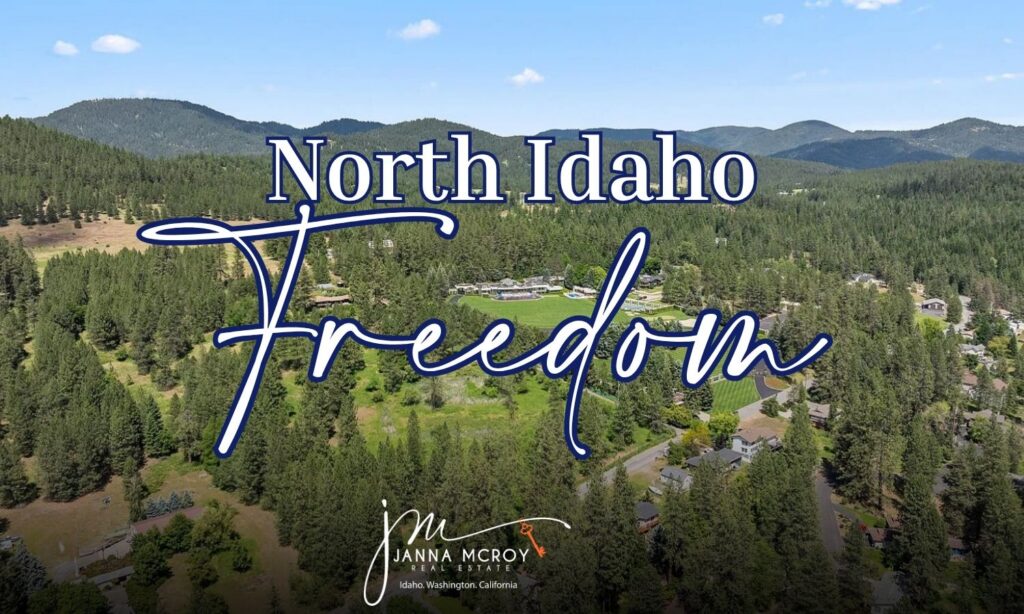
What should you budget for when moving to North Idaho from California or Washington?
Start with the mortgage, property taxes, and homeowners insurance—but don’t stop there. Your true cost of ownership can also include snow removal, private-road maintenance, well and septic expenses, utilities, acreage maintenance, wildfire-related insurance considerations, and other property-specific costs.
If you’re considering moving to North Idaho from California or Washington, understanding what a home costs to own after closing is just as important as deciding what you can afford to buy.
That distinction matters in North Idaho because two homes with similar purchase prices can have very different ongoing expenses. A home inside Coeur d’Alene or Post Falls may have a completely different ownership profile than an acreage property with a private well, septic system, shop, long driveway, or privately maintained road.
As a North Idaho Realtor, real estate investor, and Tom Ferry coach, Janna McRoy helps buyers look beyond the listing price and understand the property they’re actually purchasing. When you’re relocating from another state, that local perspective can help you identify questions that may not occur to you until after closing.
Here’s what you need to know before you make the move.
Moving to North Idaho From California or Washington? Start With Property Taxes

One of the first questions relocating buyers ask is, “What will my property taxes be?”
The important thing to understand is that you shouldn’t simply look at the seller’s current tax bill and assume yours will be identical.
According to the Idaho State Tax Commission, Idaho counties levy and collect property taxes to fund local services and taxing districts. County assessors estimate a property’s market value each year as of January 1, while the actual tax obligation depends on taxable value, applicable exemptions, and the levies associated with the property’s taxing districts.
In other words, there isn’t one universal “North Idaho property tax rate” that applies to every home.
Your taxes can vary based on where the property is located, its assessed value, exemptions, and the combination of local taxing districts that apply to that particular parcel.
Idaho’s Homeowner’s Exemption Is Important
If you own and occupy an Idaho home as your primary residence, you may qualify for Idaho’s homeowner’s exemption.

The Idaho State Tax Commission’s homeowner exemption guidance states that qualifying homeowners can exempt 50% of the value of their home and up to one acre of land from property tax, subject to the program’s maximum exemption amount.
You apply through the county assessor’s office. Once approved, the exemption generally remains in place until ownership changes or the property is no longer your primary residence.
That makes this an important item for relocating buyers to put on their post-closing checklist.
Also remember that Idaho has additional property-tax-relief programs for certain qualifying homeowners. Eligibility rules and deadlines change, so use the Idaho State Tax Commission’s current homeowner resources rather than relying on an old article or a previous owner’s tax situation.
Don’t Compare States Using Tax Rates Alone
It can be tempting to compare California, Washington, and Idaho using a single percentage.
That usually doesn’t give you the information you actually need.
Instead, when considering a North Idaho property, ask:
- What is the property’s current assessed value and tax bill?
- Which taxing districts apply to this specific parcel?
- Does the current owner have exemptions that affect the bill?
- Will you occupy the property as your primary residence and potentially qualify for the homeowner’s exemption?
- Are there separate fees or assessments you need to understand?
A knowledgeable North Idaho real estate agent can help you identify the right questions and direct you to the appropriate county resources, while your assessor or tax professional can advise you about your specific tax situation.
Homeowners Insurance in North Idaho: Get a Quote Before You Fall in Love With the House
Insurance deserves more attention than many relocating buyers give it.

You may be accustomed to getting serious about homeowners insurance once you’re already under contract. In North Idaho, it can make sense to investigate insurability and estimated premiums earlier—particularly when you’re looking at rural properties, heavily wooded lots, older homes, unique construction, or properties located farther from fire services.
The Idaho Department of Insurance explains that homeowners insurance premiums can be influenced by characteristics such as the home’s construction, roof, age, square footage, number of stories, finishes, and additional structures.
Location matters, too.
The Department notes that exposure to natural disasters, distance from a fire hydrant, and characteristics of the local fire response can affect insurance pricing.
That’s especially relevant when you move outside more developed parts of Coeur d’Alene, Post Falls, Hayden, or surrounding North Idaho communities.
Wildfire Exposure Is a Real Insurance Consideration
A beautiful wooded setting is one of the reasons many people are drawn to North Idaho. It can also be something an insurer evaluates.
In May 2026, the Idaho Department of Insurance specifically encouraged homeowners to review insurance coverage and take steps to reduce wildfire risk as the state headed into wildfire season.
That doesn’t mean every wooded home will have an insurance problem. It means insurance needs to be evaluated property by property.
Before making an offer—or at least early in your due-diligence period—consider asking an insurance professional to quote the actual address.
Find out about the premium, deductible, replacement-cost assumptions, coverage for additional structures, and any property-specific requirements or exclusions.
If the property includes a detached shop, barn, large garage, equipment storage, or other improvements, make sure your insurance professional knows they exist.
The least expensive policy isn’t necessarily the policy that appropriately covers the property you’re buying.
Hidden Cost #1: Snow Removal and Winter Property Maintenance
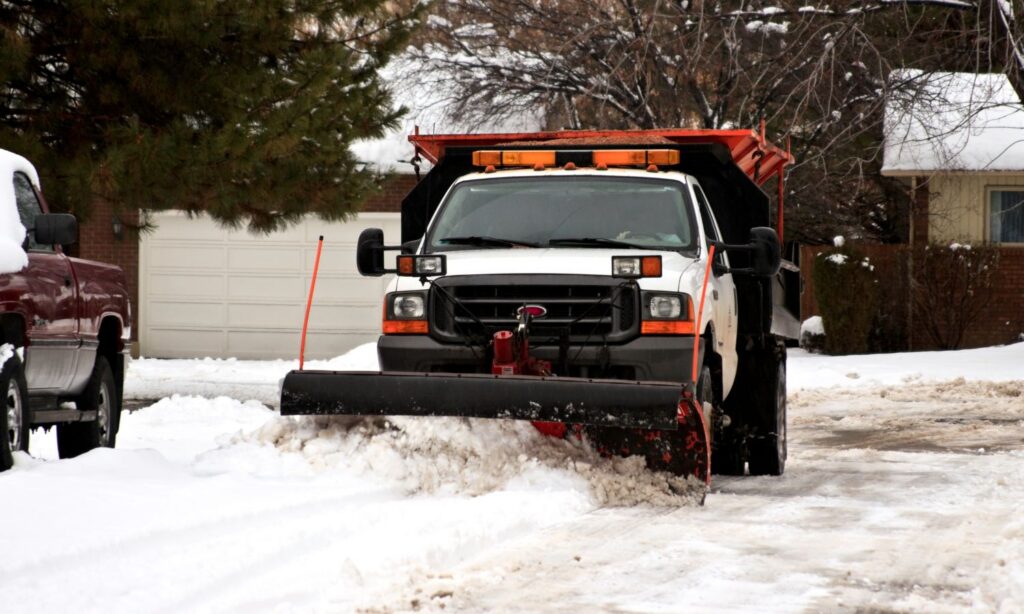
If you’re coming from Southern California, winter maintenance may be an entirely new budget category. Even if you’re moving from Washington, the needs of a North Idaho property can change significantly depending on elevation, driveway length, road access, and the home itself.
A suburban driveway and a long rural driveway are two very different maintenance commitments.
You may need to account for professional plowing or snow-removal equipment, roof and gutter maintenance, winterizing exterior systems, heating costs, and routine maintenance associated with freeze-thaw cycles.
When viewing a property in July, picture how you’ll access it in January.
Ask who maintains the road, how the driveway is managed during winter, and what equipment the current owner uses.
That conversation can tell you far more than simply admiring the view.
Hidden Cost #2: Private Roads
A private road can be easy to overlook during a showing.
The road is there. You drove on it. Everything seems fine.
But who pays when it needs grading, gravel, drainage work, snow removal, or a significant repair?
Before purchasing a property accessed by a private road, understand whether there is a recorded road-maintenance agreement, an HOA or other association responsible for maintenance, or another arrangement among neighboring property owners.
You also want to understand how expenses are divided and whether there are known upcoming projects.
This is one of those details where the paperwork matters as much as what you see on the ground.
Hidden Cost #3: Septic Systems
Many North Idaho properties are not connected to municipal sewer systems.
Instead, they use an individual septic system.
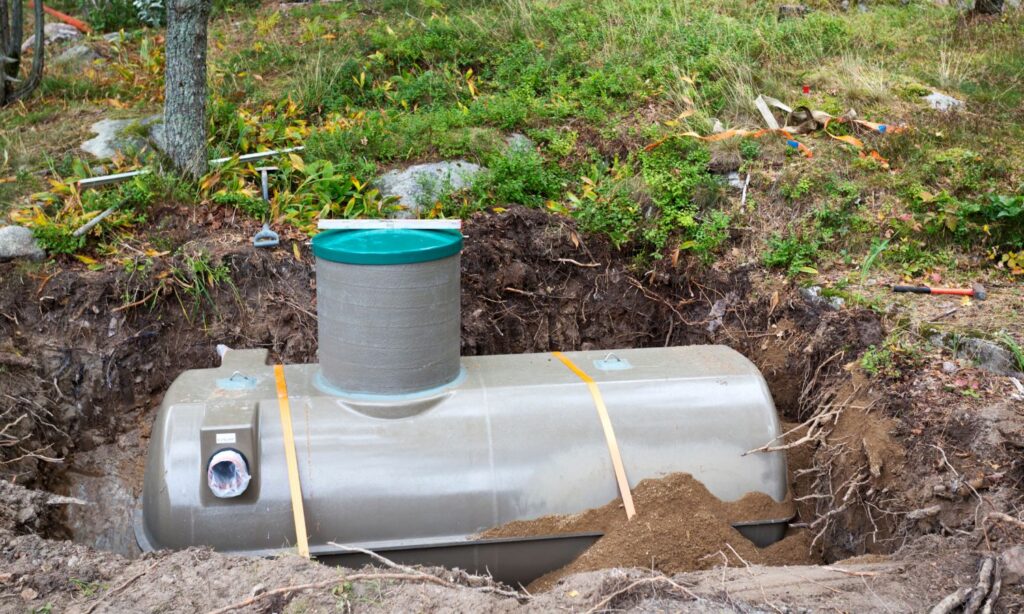
The Idaho Department of Environmental Quality explains that an individual septic system typically consists of a septic tank and drainfield or leach field. Idaho requires permits through the applicable public health district for new installations, along with the required evaluation and inspection process.
For an existing home, you’ll want to understand the system you are inheriting.
Questions may include the system’s age, location, maintenance history, pumping history, capacity, and the location and condition of the drainfield.
Septic systems aren’t inherently a negative. They’re simply another home system that needs to be understood and maintained.
If you’ve always lived on municipal sewer, make sure septic due diligence is part of your buying process rather than something you learn about after moving in.
Hidden Cost #4: Private Wells and Water Rights
The same principle applies to water.
Some North Idaho properties receive water through a municipality or water district. Others rely on a private or shared well.
The Idaho Department of Water Resources regulates well construction and well-driller licensing in Idaho. If you’re purchasing a home with a private well, there can be more to investigate than whether water comes out of the faucet.
Well records, water quality, production, equipment condition, storage systems, pumps, and maintenance can all matter.
Idaho water law can also be relevant when purchasing acreage or property with irrigation or other water uses. IDWR explains that a water right authorizes water to be used in a prescribed manner, and it provides public tools for researching wells and existing water rights.
North Idaho is also part of ongoing water-right adjudication activity. IDWR specifically identifies properties in areas of Kootenai, Bonner, Shoshone and other northern Idaho counties within its current adjudication information. You can review the Idaho Department of Water Resources water-right resources for current guidance.
If water rights are represented as part of a property’s value or intended use, verify exactly what transfers with the property and consult the appropriate professionals when necessary.
Don’t assume acreage automatically comes with unlimited water use.
Hidden Cost #5: Acreage Takes Money to Maintain
Moving from a smaller suburban lot to two, five, ten, or twenty acres can sound like the dream.
And for many people, it is.
But acreage changes your maintenance equation.
More land can mean more fencing, vegetation management, tree maintenance, driveway maintenance, equipment, irrigation considerations, pest management, and time.
A property with a long gravel driveway, mature trees, several outbuildings, and fencing simply has more physical infrastructure to maintain than a home on a smaller city lot.
Before buying acreage, think beyond “Can I afford this house?”
Ask, “Can I comfortably own and maintain this entire property?”
Those are two different questions.
Hidden Cost #6: Heating, Utilities, and Home Systems
Utility costs can also surprise relocating buyers because North Idaho homes vary dramatically.
One home may have natural gas and municipal utilities. Another may use propane, electric heat, a wood stove, a private well, and septic.
Older homes can have different efficiency profiles than newer construction. Larger homes, vaulted ceilings, shops, heated garages, and additional buildings can all change your monthly expenses.
When possible, ask for available utility information and identify the home’s major systems during your due diligence.
You’re not simply buying square footage. You’re buying a collection of systems that you’ll be responsible for operating and maintaining.
The Purchase Price Is Only the First Number
This is where relocation buyers sometimes make a costly mistake.
You sell a home in California or Washington, arrive in North Idaho with significant equity, and discover that you can purchase more house, more land, or both.
That can be a tremendous opportunity.
But buying more property also means owning more property.
A larger home can mean higher replacement costs. Acreage can mean additional maintenance. A wooded lot can affect insurance considerations. A rural location may mean well and septic systems. A long private road can introduce another ongoing responsibility.
The objective isn’t to avoid those properties.
It’s to purchase them with your eyes open.
Build a North Idaho “True Cost of Ownership” Budget
When you narrow your search, look at each serious property through four categories: purchase, monthly expenses, annual expenses, and long-term maintenance.
Your purchase costs include your down payment and closing-related expenses.
Monthly costs may include your mortgage, insurance, utilities, HOA dues where applicable, and other recurring obligations.
Annual or periodic costs may include property taxes, snow removal, septic service, propane, road maintenance, landscaping, and other property-specific expenses.
Finally, create reserves for larger future items such as roofs, HVAC systems, well equipment, septic components, tree work, driveway repairs, or outbuilding maintenance.
You don’t need to predict every future expense perfectly.
You do need to understand what you’re buying well enough to make an informed decision.
Why Local Experience Matters When You’re Relocating
Buying from several states away adds another layer to the process.
You may be comparing communities, commute patterns, lot sizes, utilities, property types, and lifestyles all at once. On top of that, North Idaho has properties that can involve private roads, wells, septic systems, acreage, shops, water rights, and other features you may not have encountered in your previous market.
That’s where local representation becomes particularly valuable.
Janna McRoy is a North Idaho Realtor, real estate investor, and Tom Ferry coach who helps buyers evaluate more than bedrooms, bathrooms, and finishes. The goal is to understand how the property works, what questions need to be asked, and whether it aligns with the way you actually want to live.
A beautiful house is only a good purchase if the property and its ongoing ownership costs make sense for you.
Ready to Start Moving to North Idaho From California or Washington?
If you’re moving to North Idaho from California or Washington, build your plan around the true cost of ownership—not just the price you see on a listing. Property taxes, homeowners insurance, wells, septic systems, private roads, winter maintenance, utilities, and acreage can all affect what a home really costs you over time.
Working with an experienced local Realtor can help you identify those considerations before they become expensive surprises. Connect with Janna McRoy to take the next step and build a North Idaho relocation strategy around the property, location, and lifestyle you actually want.