
Quick Take: Buying a newly built home can give you the opportunity to choose a floor plan, finishes, and features that fit your needs. Before visiting a model home, understand how builder representation works, what is included in the advertised price, and which contract terms could affect your costs and timeline.
Should you bring your own real estate agent to a model home?
Yes. Consider connecting with your own real estate agent before your first visit. The builder’s sales representative works for the builder, while your agent can help you evaluate the purchase from your perspective. Ask about the builder’s agent registration policy before visiting, since policies vary.
Model homes are designed to help you imagine what life could look like in a new community. They can also make it easy to focus on the beautiful kitchen or spacious primary suite before you’ve had a chance to look closely at pricing, contracts, and construction details.
If you’re considering buying new construction in Post Falls, a little preparation can help you make the most of your visit. Here’s what to know before you walk through the door and what to ask before you make a commitment.
Connect With a Post Falls Realtor Before Your First Visit
The person who greets you at a model home can be a helpful source of information about floor plans, available lots, pricing, and the builder’s process. Keep in mind that the builder’s sales representative works for the builder.
Your own real estate agent can help you compare communities, identify questions to ask, review the purchase process, and understand how a new home fits your goals. Your agent can also help you evaluate the builder’s proposed terms and recommend that you seek legal advice when a contract question requires it.
Before you visit or register online, let your agent know which communities interest you. Some builders have specific procedures for registering buyers who are working with an agent, and those procedures can vary.
Ask about representation and compensation before you begin touring so you understand your agreement with your agent and any costs you may be responsible for. Having that conversation early gives you a clearer picture of how you’ll work together.
Understand What the Model Home Actually Includes
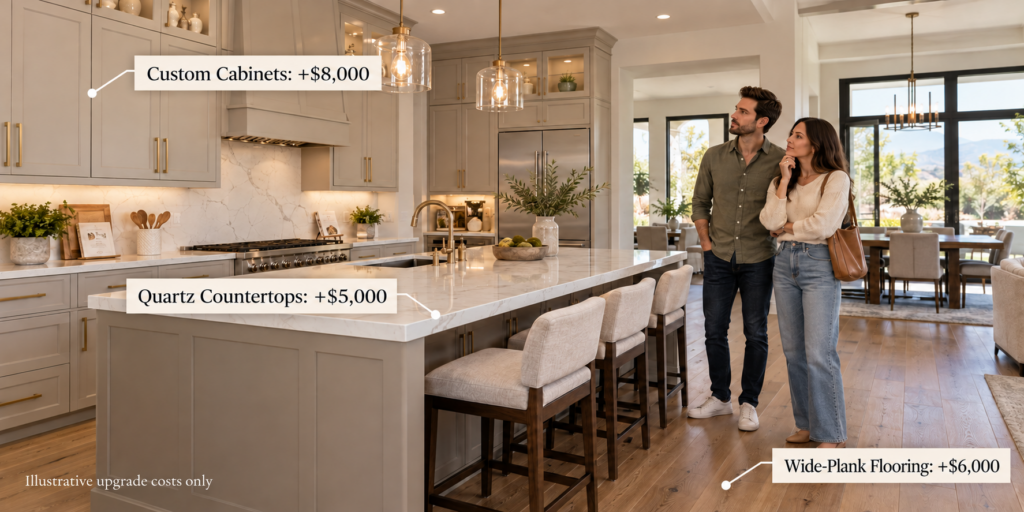
A model home is a showcase. The home you purchase may look different from the one you tour, even if you choose the same floor plan.
The model may include upgraded countertops, flooring, lighting, appliances, cabinetry, landscaping, or structural changes. Furniture and décor can also make rooms feel different than they might when empty.
As you walk through, ask which features are standard and which cost extra. Request a current list of included features and available upgrades for the specific floor plan and community you’re considering.
It’s also helpful to ask whether the options shown in the model are still available. Builders can change materials, suppliers, and selections over time.
When possible, tour a completed home with standard finishes as well. Seeing both can help you decide which upgrades matter to you and which ones you can comfortably skip.
Look Beyond the Advertised Starting Price
The price advertised for a new home is often a starting point. Your final purchase price may be higher depending on the lot, floor plan, structural choices, and finishes you select.
Ask for a written estimate that separates the base price from other anticipated charges. Depending on the home and builder, these could include a lot premium, optional features, upgrades, or other charges identified in the purchase documents.
You’ll also want to consider expenses that may come after closing. For example, find out whether the purchase price includes window coverings, backyard landscaping, fencing, appliances, and any other items important to you.
A lower-priced home can become more expensive than expected if you need to add several features after moving in. On the other hand, a home with a higher initial price may include more of what you want. Compare the complete picture before deciding which option fits your budget.
Ask your lender for an estimate of your monthly payment, too. The purchase price is only one part of the calculation. Property taxes, homeowners insurance, mortgage insurance when applicable, and homeowners association dues can affect what you pay each month.
Compare Lots and Community Details
The floor plan matters, but so does the lot it sits on. Two homes with the same layout can feel quite different depending on their surroundings and the direction they face.
Visit the specific lot you’re considering whenever possible. Look at the lot’s shape, driveway, grading, neighboring properties, and proximity to roads or common areas. Ask what is planned for nearby undeveloped land, while recognizing that future plans can change.
In North Idaho, you may also want to think about how the property will work through the seasons. Consider driveway slope, snow removal responsibilities, drainage, sun exposure, and where snow may be stored. Ask the builder about the landscaping plan and what will be completed before closing.
If the community has a homeowners association, request the governing documents, current dues, and any applicable rules before you commit. Review who maintains shared spaces and whether there are restrictions that matter to you, such as rules for fencing, exterior changes, or parking.
For questions about development or property-specific requirements within city limits, the City of Post Falls Planning Division can be a useful starting point.
Ask How Financing and Builder Incentives Work
Some builders offer incentives, such as contributions toward closing costs or financing-related benefits. An incentive may be tied to using the builder’s preferred lender or meeting other conditions.
Those offers can be valuable, but compare the full loan terms before deciding. A credit toward closing costs doesn’t necessarily mean you’re getting the lowest overall borrowing cost.
Ask lenders for Loan Estimates and compare the interest rate, annual percentage rate, lender fees, estimated cash to close, and monthly payment. The Consumer Financial Protection Bureau recommends contacting multiple lenders, even when a builder has a preferred lender.
If your home will take several months to complete, ask how your interest rate lock works and what happens if construction or closing is delayed. Find out whether extending the lock is possible, what it could cost, and who would be responsible for that expense.
Also ask your lender how property taxes are being estimated. Your initial estimate may be based on limited information, so discuss how the payment could change after the completed home is assessed.
Review the Builder’s Contract Before Signing
New construction contracts can differ from the forms used in a resale transaction. Take time to read the documents and ask questions before paying a deposit or signing.
Pay particular attention to the deposit amount, when payments are due, and what happens if financing falls through or you decide not to proceed. The Consumer Financial Protection Bureau notes that builders may require an upfront deposit, so it’s important to understand the terms attached to it.
Review the provisions addressing:
- The purchase price, selected options, and how changes are approved.
- Financing and appraisal contingencies, including applicable deadlines.
- Estimated completion and closing dates, and what happens if construction is delayed.
- Access for independent inspections and the process for addressing concerns.
- Cancellation rights, deposits, warranties, and dispute resolution.
Get important promises and agreed-upon changes in writing. If you have questions about your legal rights or contract language, consider having an Idaho real estate attorney review the documents before you sign.
Plan for an Independent Inspection
A newly built home is still worth inspecting. New materials and systems can have installation issues, and an independent inspection gives you an opportunity to learn more about the home before closing.
The City of Post Falls conducts inspections as part of its building process for properties within its jurisdiction. Its Building Division handles permits, plan review, and inspections. An independent home inspection serves a different purpose: it gives you a separate assessment of the property’s condition.
Ask the builder when an independent inspector can access the property. Depending on the construction schedule and your agreement, you may be able to arrange an inspection before drywall is installed, before closing, or both.
Review the contract carefully to understand your inspection rights and deadlines. An inspection does not automatically mean the builder must make every requested change, so ask how findings will be reviewed and resolved.
An appraisal is different from an inspection, too. An appraisal generally helps the lender assess the home’s value; it is not a substitute for a thorough review of its condition. The Consumer Financial Protection Bureau explains the value of scheduling a home inspection and checking your contract’s inspection terms.
Understand the Warranty and Walkthrough Process
Before closing, ask for the builder’s warranty documents and read them carefully. Find out what is covered, how long coverage lasts, how to submit a claim, and what exclusions or maintenance requirements apply.
The Federal Trade Commission explains that new-home warranties vary. Coverage may differ by component, and some items may be covered by a manufacturer’s warranty instead. The warranty may also describe how disputes are handled.
Your builder will likely schedule a walkthrough near completion. Use that opportunity to learn how the home’s systems operate and document items that need attention. Ask how the builder tracks those items, when work is expected to be completed, and whom you should contact after closing.
Keep copies of your contract, selections, inspection reports, walkthrough list, warranty information, and correspondence in one place. You’ll have a useful record if questions come up later.
Questions to Bring to the Model Home
Your first visit doesn’t need to feel overwhelming. Bring a short list of questions so you can leave with information you can compare across communities:
- What is included in the base price, and which features in this model are upgrades?
- Which lots and floor plans are available, and are there lot premiums?
- What is the estimated completion date, and how are delays handled?
- What deposit is required, and under what circumstances is it refundable?
- Are incentives available, and what conditions apply?
- Can I hire an independent inspector, and when can inspections take place?
- What does the warranty cover, and how are requests handled after closing?
- What are the HOA dues and rules, and what is included in them?
Ask for written information wherever possible. You can then review the details with your agent and compare homes based on more than the impression you get during a tour.
Your Next Step Toward Buying New Construction in Post Falls
A model home can help you picture the possibilities, but the best decision comes from understanding the full purchase: the lot, the features, the financing, the contract, and the builder’s process.
If you’re thinking about buying new construction in Post Falls, Janna McRoy, a North Idaho Realtor, can help you prepare for your search, compare your options, and ask informed questions along the way. Connect with Janna before your first model home visit to discuss your goals and next steps.