

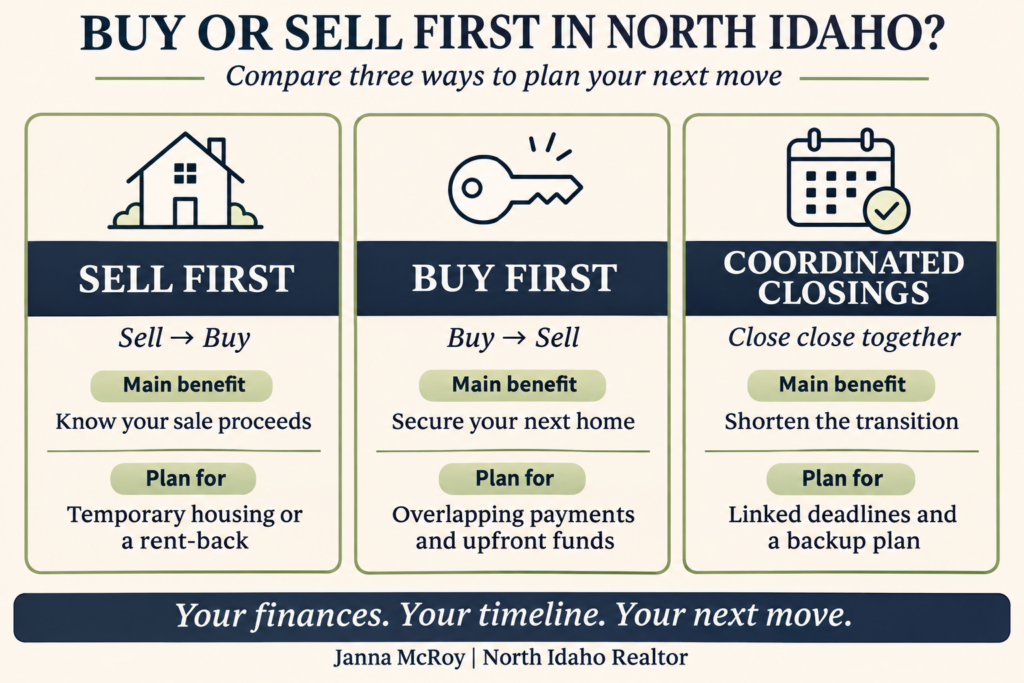
Quick Take: Deciding whether to buy or sell first in North Idaho starts with three things: access to your equity, your ability to carry two homes, and the availability of your next property. Selling first gives you a clearer budget, while buying first gives you more control over your move. A coordinated plan can help you manage either approach without relying on everything happening perfectly.
Is it better to buy or sell your home first in North Idaho?
Selling first may make sense if you need your current home’s proceeds for your next purchase or want to avoid overlapping mortgage payments. Buying first may work if you qualify financially, have enough cash available, and can comfortably handle a slower sale. Your financing, property search, and tolerance for uncertainty should guide the decision.

When you’re deciding whether to buy or sell first in North Idaho, it’s easy to feel caught between two concerns: selling your home before you have somewhere to go, or buying another home before your current one sells.
Both concerns deserve a plan. Whether you’re moving within Post Falls, exploring Coeur d’Alene, or looking elsewhere in North Idaho, your next purchase and current sale need to work together.
North Idaho Realtor Janna McRoy can help you evaluate both sides of the move, from your home’s likely selling position to the properties that fit your next chapter. The goal is to choose a sequence that works for your finances and gives you practical options if the timeline changes.
How to Decide Whether to Buy or Sell First in North Idaho
Start with this question: Can you complete your next purchase without selling your current home?
That means more than having enough for a down payment. You also need to understand your lender’s requirements, closing costs, available reserves, and the monthly expense of owning both properties.
If the answer is no, selling first or negotiating an appropriate contingency may be the starting point. If the answer is yes, you have more flexibility—but buying first still deserves a careful cost comparison.
Your next-home requirements matter, too. A broad search gives you more ways to adjust. A search with specific acreage, accessibility, layout, or property-use requirements may require more patience.
Before choosing your sequence, Janna can help you compare the homes you would be competing against as a seller with the properties you would be considering as a buyer. Those are two separate parts of your decision, even when both homes are in the same community.
Selling First: A Clearer Budget for Your Next Purchase
Selling first allows you to complete your current sale before committing to the next purchase. Once the transaction closes and proceeds are available, you know how much money you have to work with.
That clarity can make budgeting easier. You can set your down payment, retain reserves, and establish a purchase range based on actual proceeds rather than an optimistic sale-price estimate.
It also reduces the risk of carrying two homes. If overlapping payments would strain your budget, that benefit may outweigh the inconvenience of moving twice.
Plan for the gap between homes
The main challenge is where you’ll live after your sale closes.
Temporary housing may be necessary, along with storage and an additional move. Price those expenses before listing so you can compare the full cost of selling first against the cost of buying first.
A negotiated rent-back may offer another option. The National Association of Realtors’ guide to contract contingencies explains that sellers can request to remain in the home after closing if the buyer agrees. Compensation and a firm move-out date should be addressed in the agreement. nar.realtor
A rent-back should be explored early. Availability depends on the buyer’s agreement, financing requirements, insurance considerations, and the written terms.
Selling first works best when you know where you can go and how long you can comfortably stay there. That breathing room helps you evaluate your next home without letting a temporary housing deadline drive the purchase.
Buying First: More Control Over Where You Go
Buying first lets you secure your next property before leaving your current home.
You may have time to move gradually, complete work at the new property, and prepare your existing home for sale after you move out. It can also remove the uncertainty of searching while living in temporary housing.
However, the financial overlap needs to be manageable.
Your budget should account for both mortgage payments, property taxes, insurance, utilities, maintenance, and any additional borrowing costs. Ask your lender how your existing mortgage affects qualification for the next purchase.
Then consider a less convenient scenario: your current home takes longer to sell, needs additional work, or sells for less than expected. Would buying first still feel comfortable?
Understand the financing before making an offer
Depending on your circumstances, a lender may discuss bridge financing, a home equity loan, or a home equity line of credit. These options have different eligibility requirements, costs, and repayment terms.
The Federal Trade Commission’s explanation of home equity borrowing notes that home equity loans and HELOCs use your home as collateral. They involve interest and fees, and failure to repay can put the property at risk. HELOCs also typically have variable interest rates. Consumer Advice
Ask for the full cost of any proposed financing and confirm that it fits the timing of your listing and purchase. Access to equity does not automatically make a particular loan the right choice.
Buying first is strongest when you have both lender approval and enough financial breathing room to handle an imperfect sale timeline.
Can You Buy and Sell at the Same Time?
You can coordinate the transactions so they close close together, sometimes on the same day. This can reduce the gap between homes, but it creates dependencies that need careful management.
If your purchase requires money from your sale, everyone involved needs to understand when those funds will become available. Signing documents, completing closing requirements, receiving proceeds, and gaining possession should each be confirmed.
Your lender, title or escrow team, and Realtor need a shared timeline. You also need an alternative if one transaction moves back.
The Consumer Financial Protection Bureau explains that borrowers generally must receive their Closing Disclosure at least three business days before mortgage closing. Build required document-review time into your schedule rather than assuming every issue can be resolved on moving day. Consumer Financial Protection Bureau
Coordinated closings can work well, but a little room between key steps may be worth the added expense if it reduces pressure.
How a Home-Sale Contingency May Help
A home-sale contingency can connect your purchase to the sale of your current property. A home-close contingency generally addresses a sale that is already under contract but still needs to close.
These provisions may help you manage the risk of committing to a purchase before the money from your sale is available. Their protection depends on the actual contract language, deadlines, and notice requirements.
A seller may also negotiate the ability to keep marketing the property or include a kick-out provision. That can require you to make a decision if another acceptable offer arrives. Review the terms with your Realtor and, when appropriate, an Idaho real estate attorney before agreeing. nar.realtor
Whether a seller accepts your contingency depends on the property, competing offers, and your overall terms. It helps to have your current home prepared, priced thoughtfully, and ready for the next step.
Look at Your North Idaho Sale and Purchase Separately
A regional headline cannot tell you exactly how your move will unfold.
If you’re selling in Post Falls and buying in Coeur d’Alene, for example, you need to evaluate the specific price range and property type on each side. The same applies when moving between an in-town home and acreage.
For your current property, review comparable sales, competing listings, condition, and the preparation needed before launch. For your next home, review how many available properties actually meet your requirements.
Janna McRoy can help you bring those two views together. You may discover that your current home needs preparation before you start making offers. Or you may decide to begin monitoring your next-home options while getting your listing ready.
The useful question is how the properties relevant to your move affect your choices today.
Build Your Move Around Five Decisions
Before you list or make an offer, work through these five decisions:
- Confirm your financing. Ask your lender what you can purchase before selling and what changes after your sale closes.
- Estimate your net proceeds. Account for mortgage payoff, selling expenses, negotiated credits, and other transaction costs.
- Set your comfort limit. Decide how much you’re willing to spend on overlapping ownership or temporary housing.
- Define your next-home requirements. Separate essential features from preferences so you understand your search flexibility.
- Choose your backup plan. Know what you’ll do if your sale, purchase, or possession date changes.
If your starting point is understanding your current home’s potential value, request a custom home value report. Use that as the beginning of a proceeds discussion, then refine the numbers around your property and planned transaction.
Choose the Sequence That Fits Your Move
Selling first may give you financial clarity. Buying first may give you greater control over your destination. Coordinating both transactions may help shorten the transition, provided you understand the dependencies and have a workable backup.
You don’t have to decide by guessing which risk will be easier to handle. Start with your numbers, review the properties relevant to your move, and choose your timeline before committing.
If you’re deciding whether to buy or sell first in North Idaho, connect with Janna McRoy. As your North Idaho Realtor, Janna can help you evaluate your selling position, explore your next-home options, and create a coordinated plan for moving forward.